



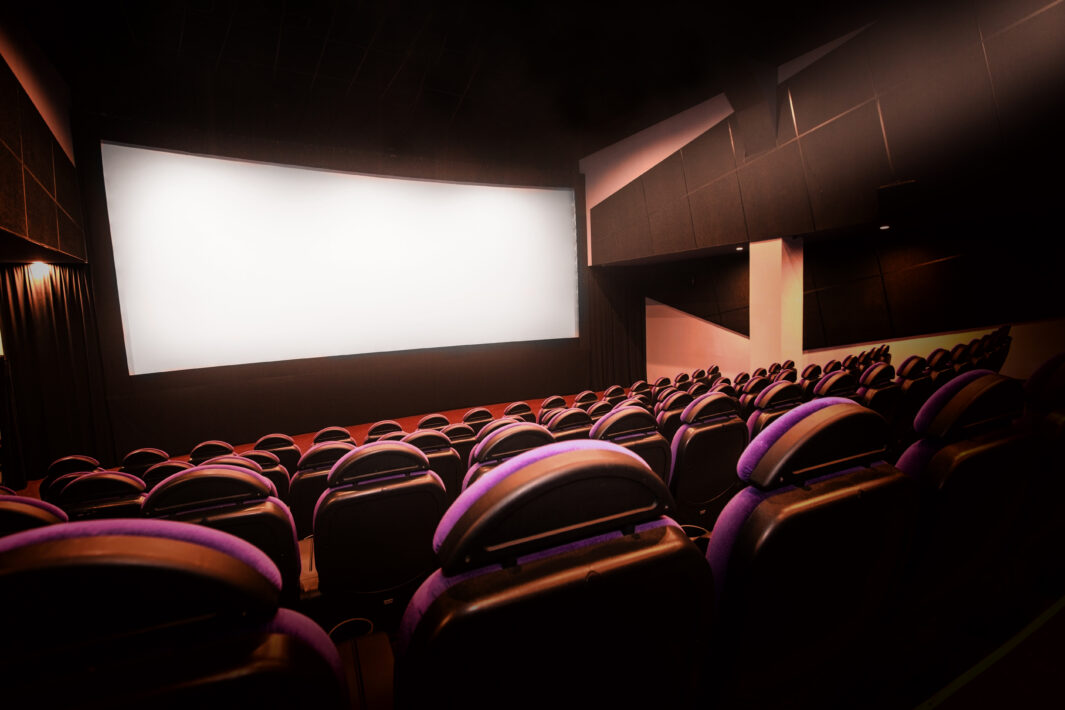

Over the past fortnight, Christopher Nolan’s The Odyssey has pulled crowds into IMAX and premium halls, and even revived 35mm film screenings at Shaw Lido, the only cinema in South-east Asia to offer them. Yet for other well-received releases this season, from the horror hit Obsession to the Teochew family drama Dear You, most of us were perfectly content with a standard hall. That gap in behaviour tells us where cinema is heading.
Take a look at cinema ticket prices today and you might get a shock. In Singapore, premium seating – with plush leather recliner seats and built-in perks for food and drink – has become more commonplace, costing between $25 and $50 per ticket. Watching movies used to be a casual mass-market experience, which has now been repositioned as a luxurious lifestyle product.
For decades, cinemas operated as mass-market entertainment providers. They were built on volume, high footfall, standardised experiences and relatively affordable pricing.
Consider the scale. At its peak in 2011, Singapore cinemas sold 22.1 million tickets, translating to roughly 4.3 trips per person annually at the time. The typical weekday evening ticket cost between $8.50 and $11.50. Relative to income, a 2012 ticket cost of $8.50 represented approximately 0.24 per cent of the median monthly income of $3,480 – comparable to the price of a hawker centre meal, or slightly more than kopi and kaya toast.
The experience was deliberately standardised: uniform seating capacities, fixed schedules and the familiar 10-minute pre-show advertising reel across all halls. That predictability was the value proposition for budget-conscious families and students.
Today, the landscape has bifurcated. Mass-market tickets still exist, ranging from $10 to $16 for a standard screening. However, premium formats have proliferated. At major multiplexes, premium screens now account for approximately one-third of total screens, up from less than 10 per cent a decade ago.
While mass-market tickets still dominate weekday matinees, operators are clearly investing more capital and physical space in the premium segment as a strategic hedge against decline.
Logical but precarious repositioning
Today, that model is under pressure from multiple directions. The rise of streaming platforms like Netflix, Disney+ and Amazon Prime Video has fundamentally altered the value proposition of going to the movies. Films that once had exclusive theatrical runs for months are available at home for on-demand individual viewing within weeks. In some cases, they are released simultaneously.
That digital convenience of being able to watch summer blockbusters and highly anticipated theatrical releases erodes the scarcity that once justified the cinema experience and shifts consumer expectations. When content is abundant and accessible, the question is no longer “What should we watch?” but “Why should I leave my home to watch it?”.
The industry’s response to avert structural decline – including managing debt incurred during pandemic lockdowns and crowd restrictions – has been to reposition cinema as a luxury lifestyle experience, rather than a mass cultural institution.
Shaw Theatres Lido at Orchard Road illustrates this shift clearly. In 2014, Lido operated 11 largely standardised halls. Today, after renovation, the cinema offers a few distinct premium tiers including Standard ($11-$15.50), IMAX ($22-$25), Lumiere ($23-$28) and Premiere ($30-$35).
Consequently, while a patron in 2014 could choose from essentially 11 mass-market options, the current patron chooses from seven standard and four premium halls. That means the physical capacity dedicated to standard, mass-market screenings has been reduced by nearly 40 per cent at the very moment attendance numbers are falling.
This is not a marginal adjustment. It is a deliberate reallocation of capital and real estate, from volume-oriented, standardised entertainment to curation-oriented, luxury experiences.
This is a classic case of economic repositioning: When a product becomes commoditised, firms differentiate through added value. In this case, that added value is physical, sensory and social. Reclining seats, immersive sound systems, gourmet food and curated environments are strategic responses to an existential threat.
In this sense, cinema is aligning itself with a broader shift towards what economists call “experiential consumption”. Across industries, consumers are spending more on experiences than on goods, particularly in urban, high-income environments. Dining, travel, concerts and immersive entertainment are all benefiting from this trend.
In dining, Singapore’s proliferation of omakase counters charging from $200 to $400 a person exemplifies this premium shift. Omakase restaurants, virtually non-existent a decade ago, occupy a wider spectrum of quality and intent, from traditional 19-course kaiseki at high-end establishments to intimate eight-seat counters hidden in shophouses. The trend reflects a broader willingness to pay for curation, chef interaction and scarcity of seats.
In travel, the “bleisure” segment, business travellers extending trips for leisure, has fuelled demand for boutique hotels that charge premium rates not for square footage but for atmosphere, heritage design and personalisation. Properties like 21 Carpenter, housed in a former remittance house, command from $400 to $600 a night by offering narrative-driven stays, rather than just a bed.
Even retail, the traditional bastion of goods consumption, has pivoted towards experience. Global brands in Singapore now feature in-store fitness classes, personalised fitting sessions and community events rather than just product displays. The common thread across dining, travel and retail is the same logic reshaping cinemas: When the functional product becomes commoditised, differentiation moves into curated experience, physical ambience and social signalling.
There is also a broader economic context to consider. Rising operational costs, such as real estate, labour and technology, along with the higher cost of producing movies today, are pushing cinemas to increase prices. At the same time, competition from streaming is compressing revenues.
But there is a fundamental tension here. Unlike concerts or live sports, cinema is not inherently scarce. A live performance by singer Bryan Adams or a football match featuring Lionel Messi cannot be replicated at home in real time. The value lies in the uniqueness of the event. A film, by contrast, is reproducible. Its core content does not change whether viewed in a cinema or at home.
This makes the cinema’s attempt to position itself as a premium experience both logical and precarious. It is logical because differentiation is necessary. It is precarious because the underlying product lacks the inherent scarcity that typically supports premium pricing.
Can movie-going sustain a smaller audience?
The trouble also is that not everyone will pay $50 or even $25 for a non-live entertainment experience – only those who value premium experiences, seek activities for social gatherings or view cinema beyond mere content consumption.
Most consumers today are conditioned to instant gratification and the ability to consume entertainment based on what’s readily available. This shift is particularly pronounced among younger audiences, who have grown up in a digital-first environment. For them, the baseline expectation is convenience, personalisation and control. The cinema, with its fixed schedules and standardised offerings, can feel unnecessarily restrictive without offering something superior.
This segmentation strategy also comes with other trade-offs. Premiumisation inevitably narrows the audience. A $50 ticket transforms cinema from a routine activity into an occasional indulgence. The challenge then for cinema operators is to balance premium offerings with broader accessibility. If the industry over-indexes on high-end experiences, it risks alienating a middle-class audience that once sustained it.
Erosion of a shared experience
As cinemas reposition themselves for a more exclusive audience, something else is also lost in the process. The cinema, at its most functional, was never simply a delivery mechanism for film, but also a space in which strangers agreed, for two hours, to share an emotional experience – a show that engendered laughs, tears or profound reflection.
Oxford University anthropologist Robin Dunbar’s research on social bonding identifies several mechanisms through which humans build and maintain trust and cohesion: physical co-presence, synchronised behaviour, shared emotional arousal and narrative. The cinema, remarkably, delivers all four simultaneously. It is one of the few secular, non-sporting, non-political public rituals remaining in urban life that regularly achieves this combination.
This matters enormously in 2026, when the data on social health is alarming. The World Health Organization declared loneliness a global public health priority in 2023. Surgeon-General advisories in the United States have described the loneliness epidemic as comparable in mortality risk with smoking 15 cigarettes a day.
In Singapore, surveys by the Institute of Policy Studies have consistently found that young adults report lower levels of community belonging than older cohorts, even as digital connectivity reaches saturation. Being more connected by technology, but remaining more isolated in practice has become the defining psychological contradiction of the current moment.
Against this backdrop, the cultural spaces that facilitate genuine co-presence such as cinemas, theatres, libraries and community halls are critical infrastructure for psychological and social health. Their contraction, pricing-out or transformation into exclusive lifestyle venues should not just be viewed through socio-cultural lenses, but also as a condition of public malaise and a concern for public health.
The premium model transforming cinemas also raises the question that urban planners, cultural economists and policymakers have been slow to confront directly: When shared cultural spaces become economically stratified, what happens to the social mixing they once enabled?
The historical cinema was imperfect but genuinely democratic. Variable pricing, student concessions, off-peak discounts and neighbourhood multiplexes with lower overheads helped bring people from different income brackets into the same room. Many of these accessibility measures remain in place today, but the growing share of premium formats means an increasing proportion of cinema investment is being directed towards higher-spending segments.
As the economics of cinema renovation push operators towards premium, what replaces it is a tiered landscape. Mass-market cinema is not disappearing; standard screenings still account for most tickets sold, supported by regular pricing, concessions and discounts.
However, as more investment flows into premium formats, the industry is increasingly relying on higher-value customers to sustain profitability. This reflects a broader trend of cultural spaces becoming more commercialised, leaving fewer open arenas for spontaneous interactions across class lines.
A signal worth studying
The opposite may also be true: the revival of premium cinema in Singapore might reflect something cherished: the value of presence, ritual and shared physical experience in an age of digital saturation.
People might be willing to pay more – sometimes significantly more – to feel that an experience is deliberate, curated and worth showing up for.
Discerning which scenario is more likely to play out with the rise of premium cinemas can tell us much about human behaviour in the digital age.
For now, the premium pricing model is undoubtedly a ceiling that excludes, and a signal that the cultural economics of shared leisure are moving in a direction that deserves more scrutiny than it typically receives. That does not mean cinemas are abandoning the mass market altogether, but rather that the balance between mainstream and premium experiences is shifting.
The article was first published in The Straits Times.