


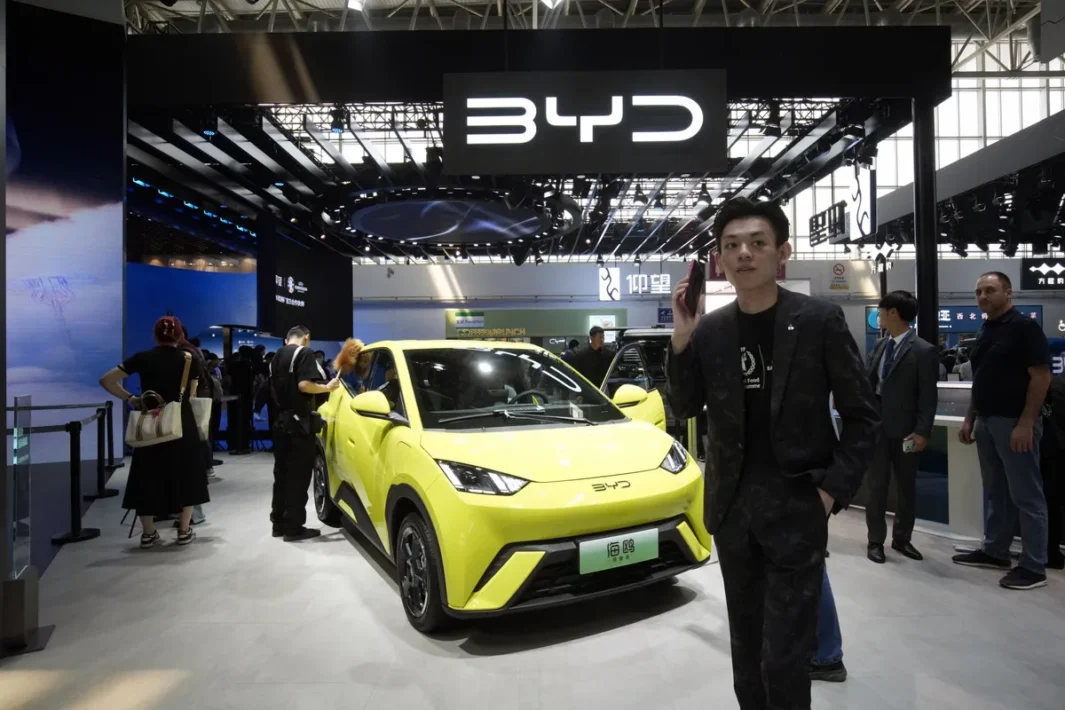

When Chinese electric vehicle giant BYD recently surpassed Tesla in global sales, headlines celebrated a milestone in the ongoing EV race. It was a moment of triumph for a Chinese home-grown brand that, not too long ago, was little known outside Asia.
Beyond this milestone lies a deeper, less discussed breakthrough: BYD may have outpaced Tesla in sales, but the more interesting shift is how it’s beginning to play the long game of brand-building.
For years, Chinese firms have been defined by their ability to impress the world – through scale, speed, pricing and engineering. What BYD has begun to show is that to compete globally at the highest level, Chinese brands must also learn to inspire.
That means something more than exporting cutting-edge products. It means exporting ideas, identities and stories that emotionally resonate with audiences far beyond China’s borders. In other words, success will no longer be measured solely in units sold or patents filed but in the kind of narratives being told and whether they spark a connection.
BYD’s transformation is subtle but significant. Once known mostly for low-cost electric vehicles, it has evolved into a brand with a clear lifestyle focus. Its cars now come with globally appealing names like Dolphin and Seal, and its marketing has shifted from technical specs to emotional experiences. The message is no longer just “we’re good at making EVs”. It’s “we understand how you want to feel in the future of mobility”.
This shift is important because Tesla did not rise on engineering alone. It rose by creating a cultural phenomenon. Elon Musk framed Tesla as a mission-driven brand – one built on climate action, energy independence and the future of humanity. Love him or not, Musk understood that the emotional dimension of branding is often more powerful than the product itself.
BYD seems to be learning this lesson, and it shows a path forward for many Chinese brands.
China is, by all objective measures, a global tech superpower. It is a world leader in clean energy deployment, artificial intelligence, digital payments and, increasingly, consumer electronics. Chinese companies are reshaping industries from Southeast Asia to Africa. However, few Chinese brands have embedded themselves in the emotional lives of global consumers like Apple, Nike or even Samsung.
While Chinese brands have often focused on performance, they have paid less attention to perception. They have mastered production, but not necessarily storytelling. They’ve shown power more often than personality.
This isn’t just a branding oversight – it’s a strategic blind spot.
Global consumers today aren’t just choosing products. They’re choosing identities. They’re asking not only “Does this work?” but “Does this reflect who I am?” and “Do I want to be part of what this brand stands for?”
American and Korean brands have long understood this. The success of companies like Apple or LG has always depended as much on storytelling as on supply chains. They embed their products in a larger narrative of lifestyle, creativity or status.
Chinese brands, in contrast, tend to rely on themes of technological superiority, national pride or sheer market competitiveness. These messages may impress, but they rarely invite. They speak in the language of achievement, not affinity. For China to evolve into a true soft power – not just a manufacturing or infrastructure power – its brands must become mirrors for the hopes and identities of others, not just windows into its own ambition.
There is no shortage of cultural material to draw from. Chinese values such as collectivism, harmony with nature and the pursuit of shared prosperity are deeply relevant in a world grappling with climate change, inequality and social fragmentation. But for these values to travel globally, they must be told through stories, not statistics – through characters, not slogans.
Take TikTok, arguably China’s most emotionally successful export to date. Its magic lies not in algorithms alone, but in how it empowers self-expression. It’s a platform where anyone can feel seen. It doesn’t just showcase Chinese tech. It reflects human creativity.
The same approach can be extended to Chinese fashion, cinema, consumer goods and even electric vehicles. If companies like BYD can continue to move beyond performance metrics and begin to build emotionally resonant narratives, they can lead not just in market share, but in mindshare.
Branding is not an afterthought. It is the strategic expression of identity and vision. In a world saturated with choice, brands are the emotional shorthand people use to make decisions. In an era where trust, authenticity and values matter more than ever, brands that evoke connection will outperform those that merely deliver function.
Chinese brands can impress. The world already knows that. The next chapter will depend on whether they can inspire, tell stories that people want to be part of and move beyond merely exporting efficiency to exporting emotion.
BYD’s milestone may be remembered not just for surpassing Tesla, but for signalling this very shift. The rise of Chinese brands is real. But how the world feels about that rise will be shaped not just by what they build but by what they believe – and how that belief is told.
This article was first published in SCMP.
Photo by Bloomberg.