



Media Highlights
Eye On Indonesia
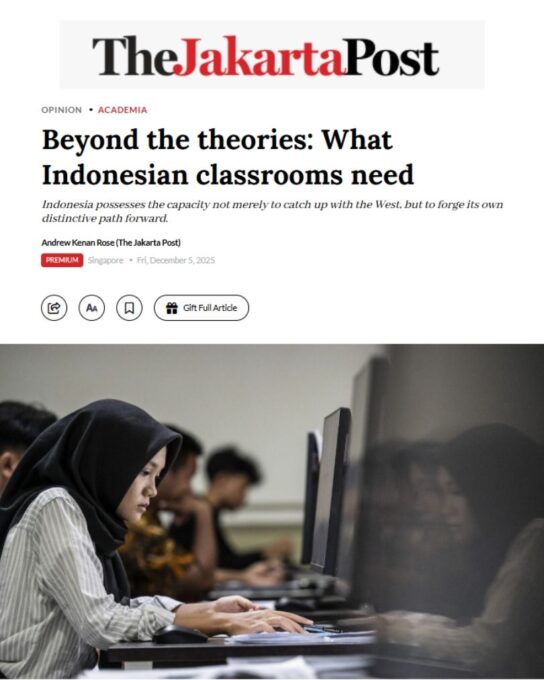
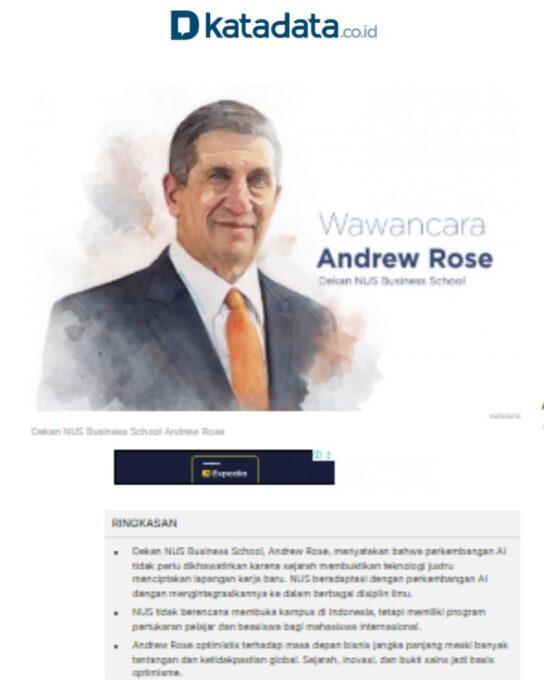
As NUS Business School marked its 60th anniversary, Dean, Distinguished Professor Andrew Rose higlighted how business education can navigate technological disruption while staying anchored in regional realities. Drawing on decades of visits to Indonesia, he reflected on its classroom culture and the skills needed in an era shaped by AI, geopolitical uncertainty, and shifting patterns of work. Across his insights in Katadata and The Jakarta Post, he argued that fears of AI-induced job losses miss the bigger picture. New technologies will create new roles, placing the onus on business schools to integrate AI into core disciplines, deepen experiential learning, and forge cross-border partnerships so that global knowledge translates into locally relevant leadership and entrepreneurial outcomes for Indonesia and the wider Southeast Asian region. The combined coverage reached an estimated 220 million viewers and readers across Singapore, Indonesia, and neighbouring countries.
Sustainability and Corporate Governance
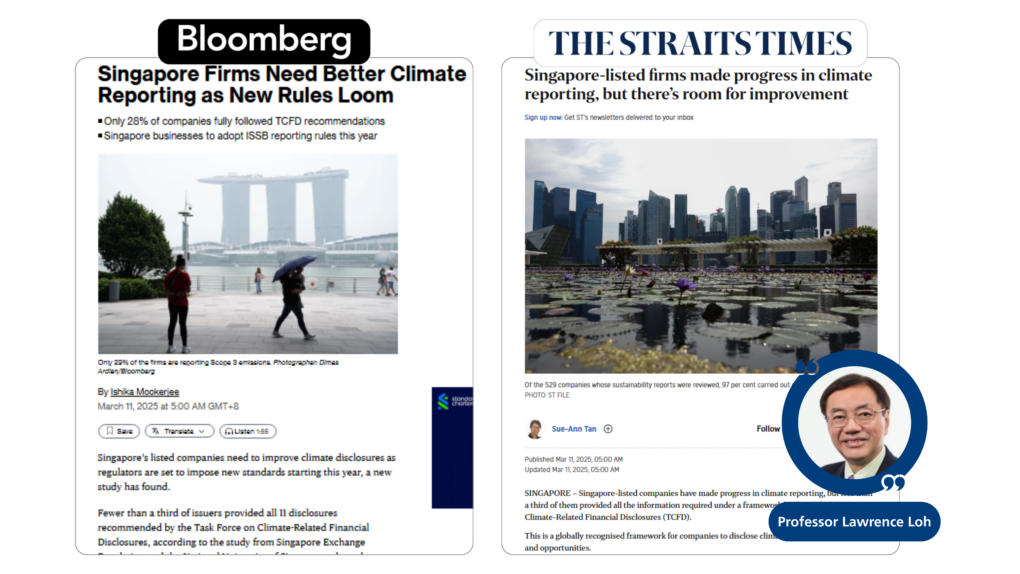
Sustainability remained a key theme in 2025, placing the School’s expertise in corporate governance at the forefront of international coverage. A joint review by the Centre for Governance and Sustainability (CGS) and Singapore Exchange Regulation (SGX RegCo) revealed critical gaps in climate reporting among Singapore-listed companies. In Bloomberg and The Straits Times, Professor Lawrence Loh (Director, CGS) highlighted the absence of Scope 3 emissions disclosures as a “critical weak link” for firms seeking compliance with emerging climate rules.
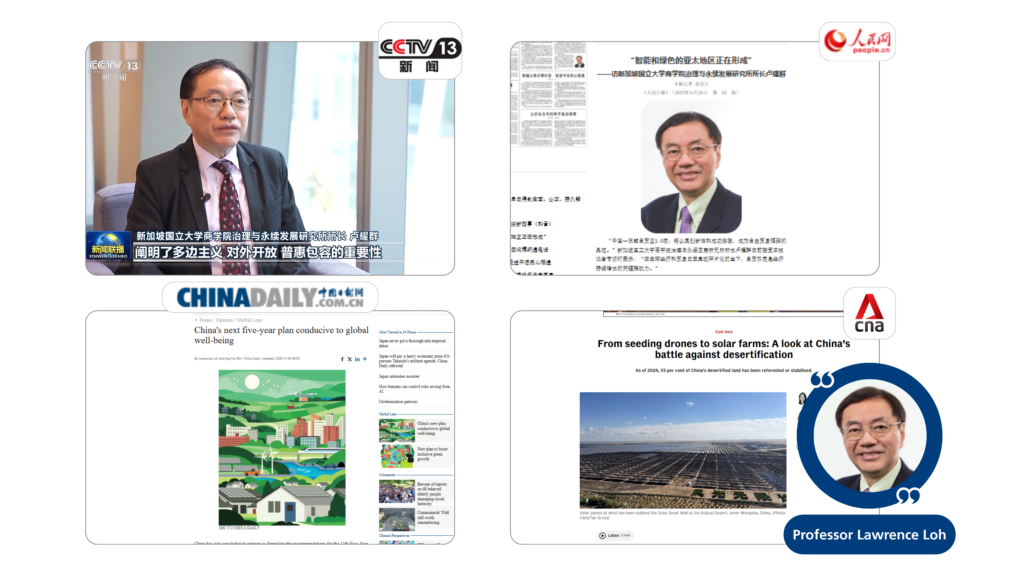
Following the COP30 summit, Professor Lawrence Loh (Director, Centre for Governance and Sustainability) contributed his views on China’s climate leadership. In an extensive series of interviews and opinion pieces across CCTV, China Daily, People’s Daily and CNA,Professor Lawrence Loh noted China’s growing influence in shaping regional sustainability efforts, crediting its climate policies with generating a positive spillover throughout Asia. The combined reach of all stories reached more than 900M.
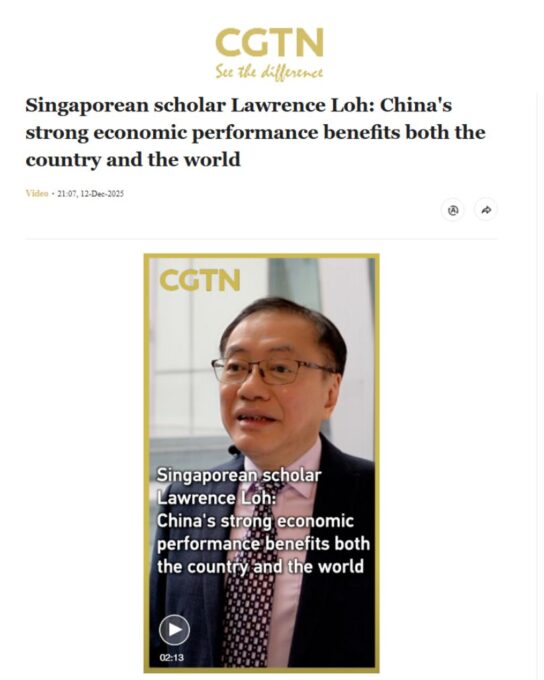
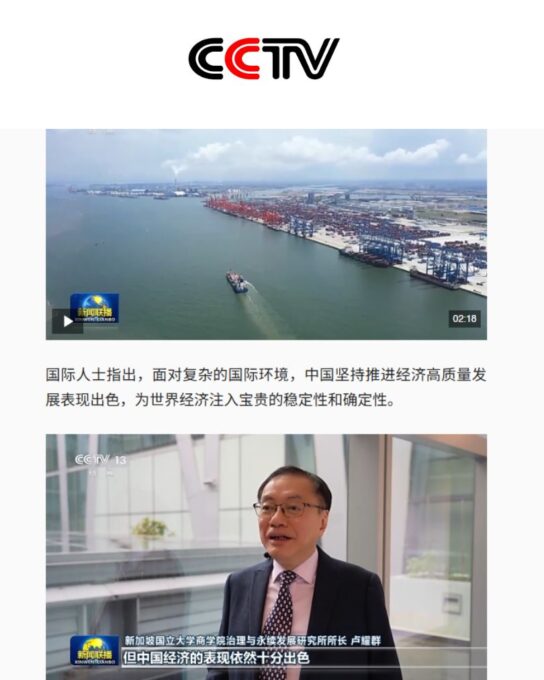
As the go-to voice on governance and sustainability, Professor Lawrence Loh (Director, Centre for Governance and Sustainability) also offered a measured read to more than 200M viewers on China’s national and global broadcasters CGTN and CCTV regarding China’s next phase of growth. Professor Loh shared that its emphasis on high-quality development will remain a key anchor for the global economy, with ASEAN standing to gain in particular. Framed against a year of volatility, Professor Loh’s assessment positioned China not just as a source of headline growth, but as a bellwether shaping regional strategy, investment flows, and the contours of Asia’s economic resilience in the years ahead.
Business, Industry and the Economy
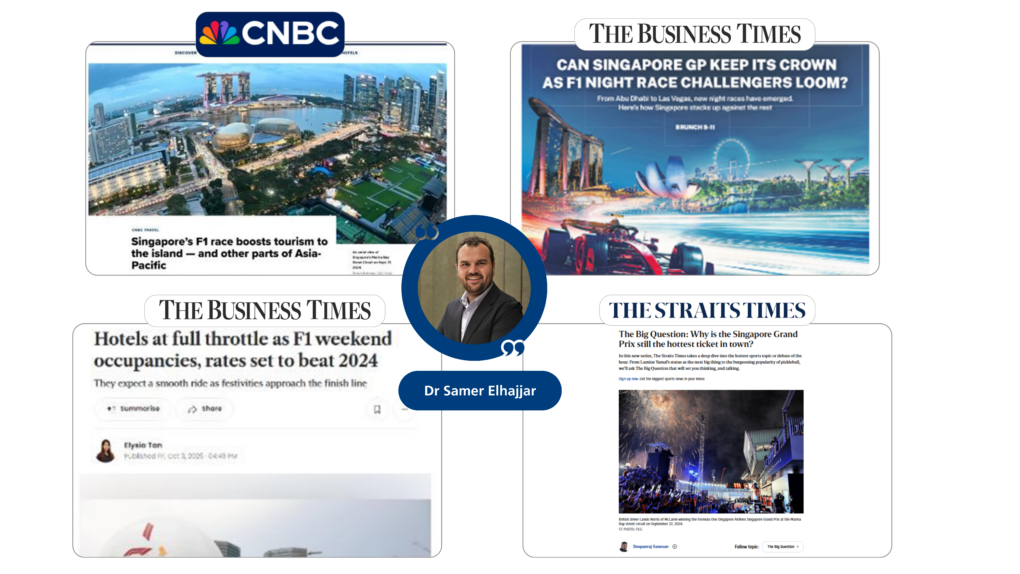
World attention turned to Singapore for its marquee motorsport event, the Formula 1 Singapore Grand Prix. Riding the buzz, Dr Samer Elhajjar (Department of Marketing) spoke to CNBC, The Straits Times, and The Business Times about the F1 race’s economic impact and its spillover effects on tourism and hospitality. The coverage reached an estimated 373 million across platforms.
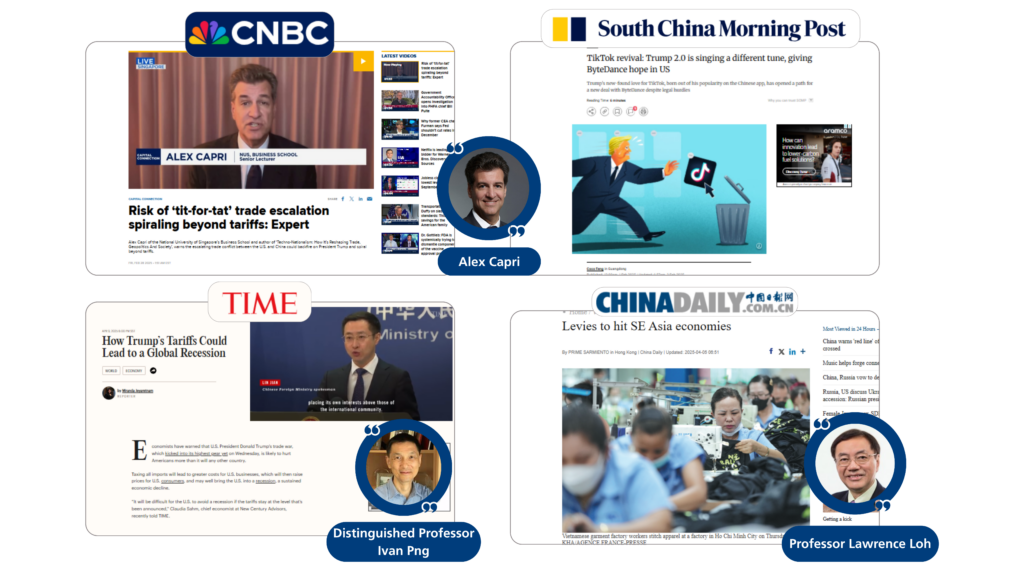
Trade tensions dominated headlines after President Trump’s inauguration, with renewed US tariffs and a proposed TikTok ban sparking debate. Adjunct Senior Lecturer Alex Capri (Department of Analytics and Operations) shared his analysis with more than 480M viewers and readers on CNBC, South China Morning Post, warning of escalating strains in US–China trade relations and their global repercussions. Distinguished Professor Ivan Png (Department of Strategy and Policy) and Professor Lawrence Loh (Director, CGS) were also featured in Time and China Daily, examining the impact of tariffs on global pricing, competitiveness, and Asia’s strategic positioning with more than 470M readers.
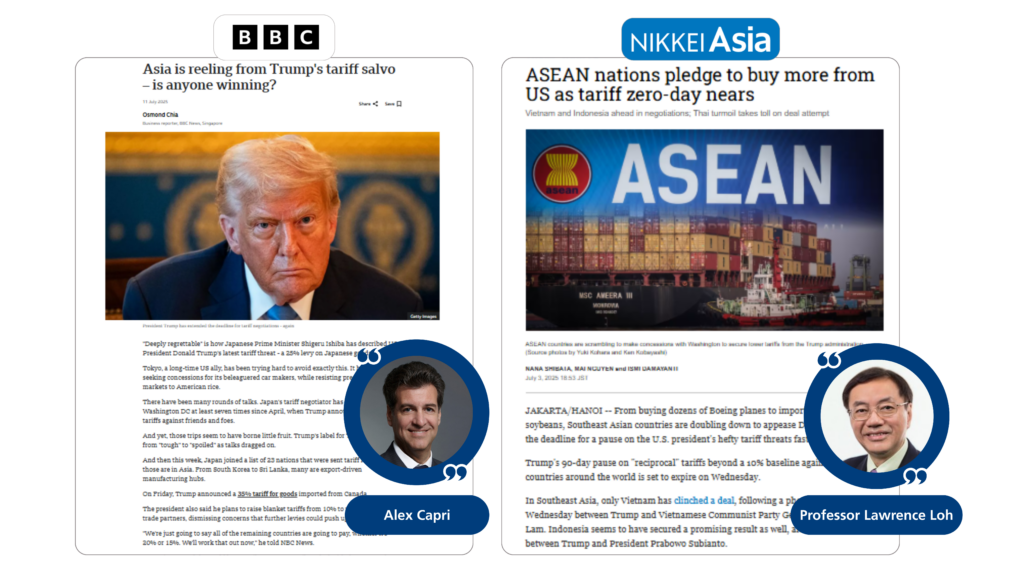
As tariff deadlines loomed in mid-2025, international headlines were made. Adjunct Senior Lecturer Alex Capri (Department of Analytics and Operations) spoke to BBC’s 400M viewers about technological hurdles in implementing tariff policies, while Professor Lawrence Loh (Director, CGS) discussed ASEAN’s collective response in Nikkei Asia, emphasising the region’s pragmatism amid shifting global economic headwinds to 3.7M readers.
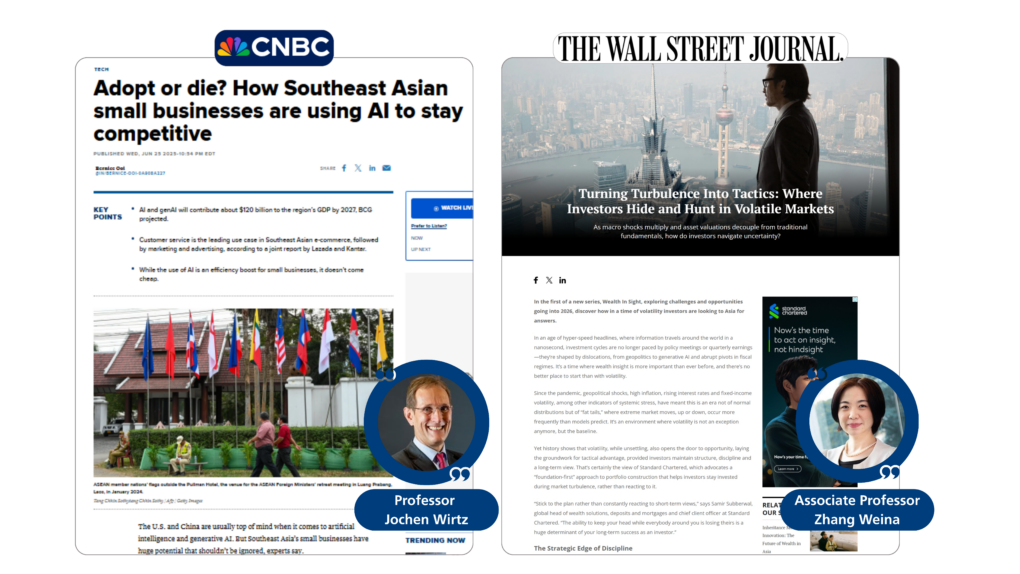
Across Southeast Asia, small businesses are finding new ways to integrate AI and GenAI into their operations to stay ahead in an increasingly competitive landscape. Professor Jochen Wirtz (Vice Dean, MBA Programmes) shared his insights with more than 370 million readers on CNBC, highlighting how technology can complement entrepreneurship and strengthen the regional economy. Reflecting this broader theme of resilience, The Wall Street Journal featured Associate Professor Zhang Weina (Department of Finance), who noted that Asia powered close to 60% of global growth in 2024 and discussed how businesses can turn volatility into long‑term opportunity.
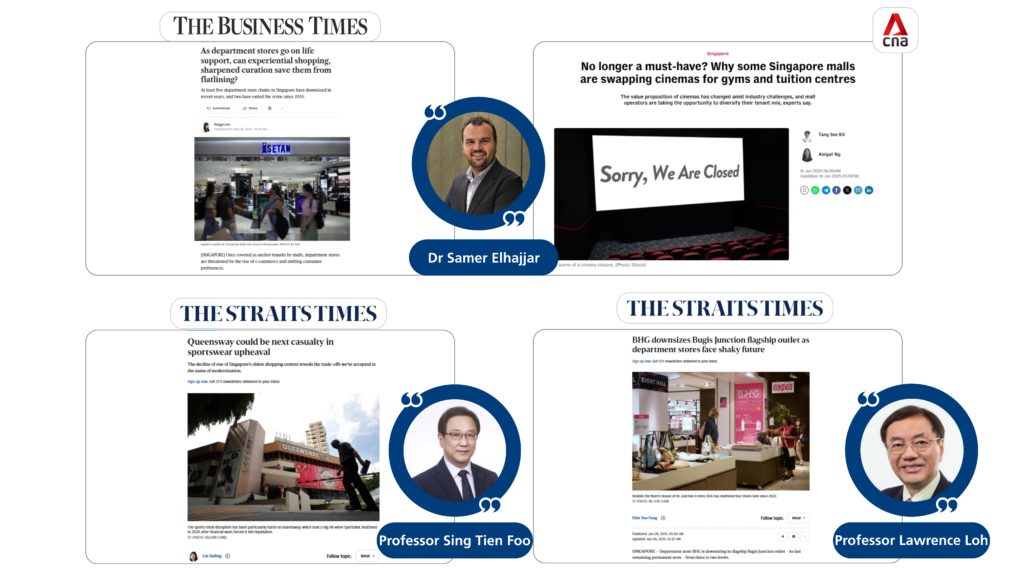
On the home front, Singapore’s retail industry faced a wave of closures and consolidation, prompting insights from Professor Lawrence Loh (Director, CGS), Professor Sing Tien Foo (Department of Real Estate), and Senior Lecturer Dr Samer Elhajjar (Department of Marketing). Across The Straits Times, The Business Times, and CNA, adaptive strategies for retailers and mall operators in a changing consumer landscape were shared with more than 100M viewers and readers.
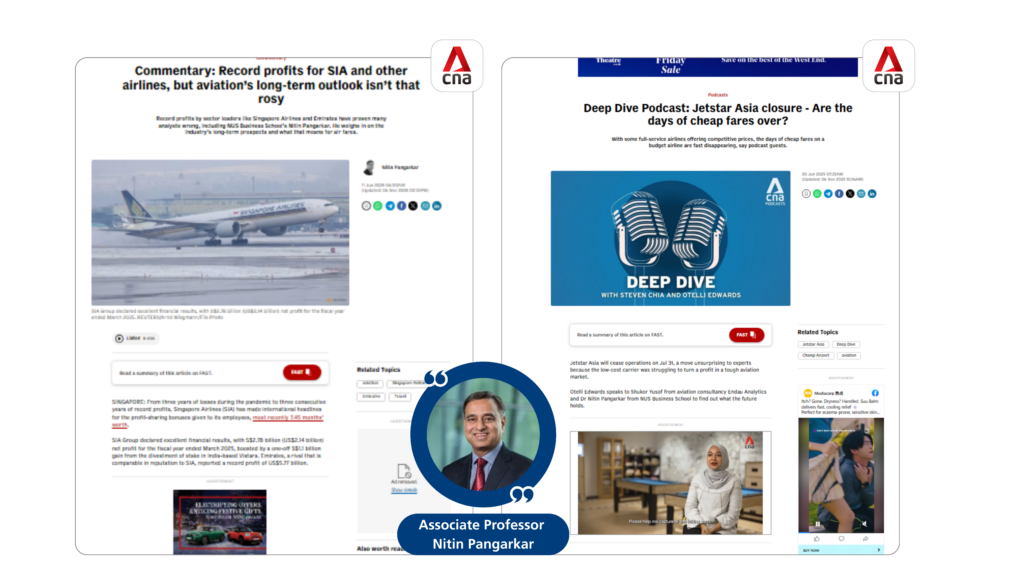
The aviation sector also drew attention with Jetstar Asia’s closure contrasted against Singapore Airlines’ record profits as Associate Professor Nitin Pangarkar (Department of Strategy and Policy) discussed the implications for regional air travel and cost competitiveness with 100M listeners and readers across CNA and CNA938.
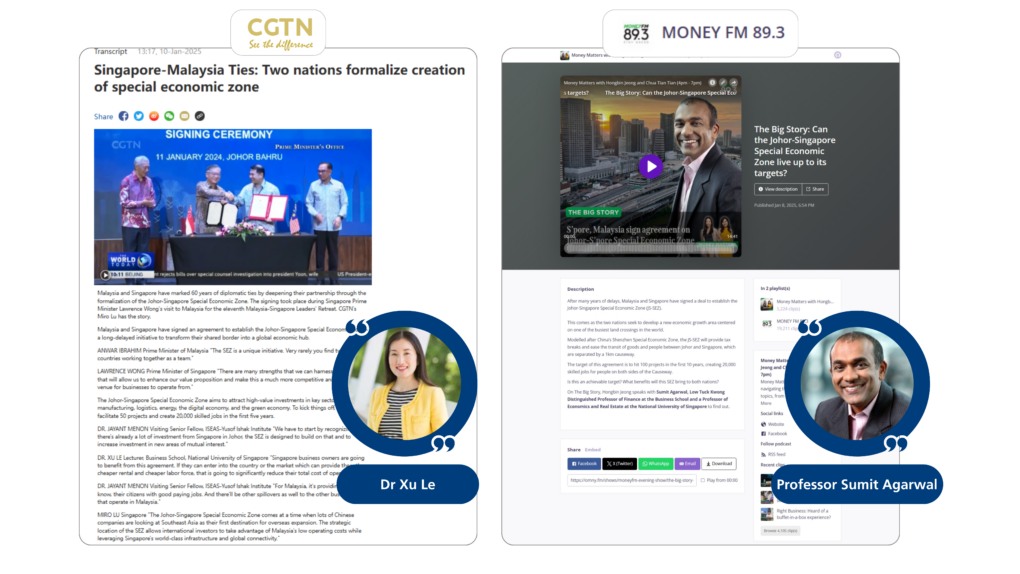
Reflecting growing attention to regional economic integration, NUS Business School experts examined the Johor–Singapore Special Economic Zone and its implications for cross‑border investment and growth. Professor Sumit Agarwal (Department of Finance and Real Estate) and Dr Xu Le (Department of Strategy and Policy) offered expert perspectives on MoneyFM 89.3 and CGTN, reaching a combined audience of 150M across multiple markets.
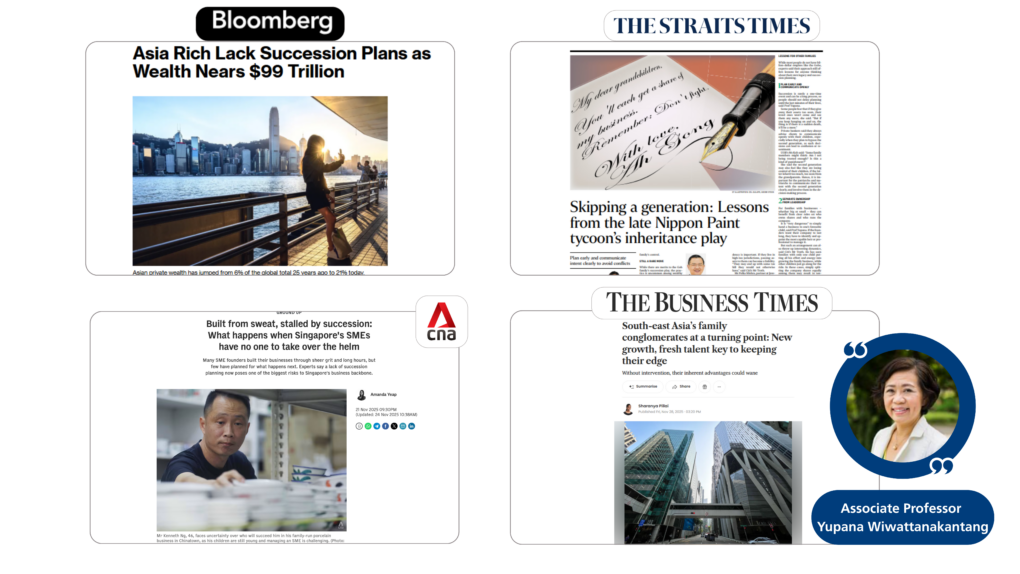
NUS Business School’s regional Thought Leadership gained fresh momentum as Associate Professor Yupana Wiwattanakantang (Department of Finance) took centre stage across Bloomberg, The Straits Times, The Business Times, CNA and other leading media. Speaking on a major joint study by UOB Private Bank, Boston Consulting Group and NUS Business School, Associate Professor Wiwattanakantang spotlighted a stark reality confronting Asia’s family enterprises: weak succession planning is fast becoming one of the greatest risks to their long-term survival. The combined coverage reached an audience of more than 126M.
Social Media Highlights