


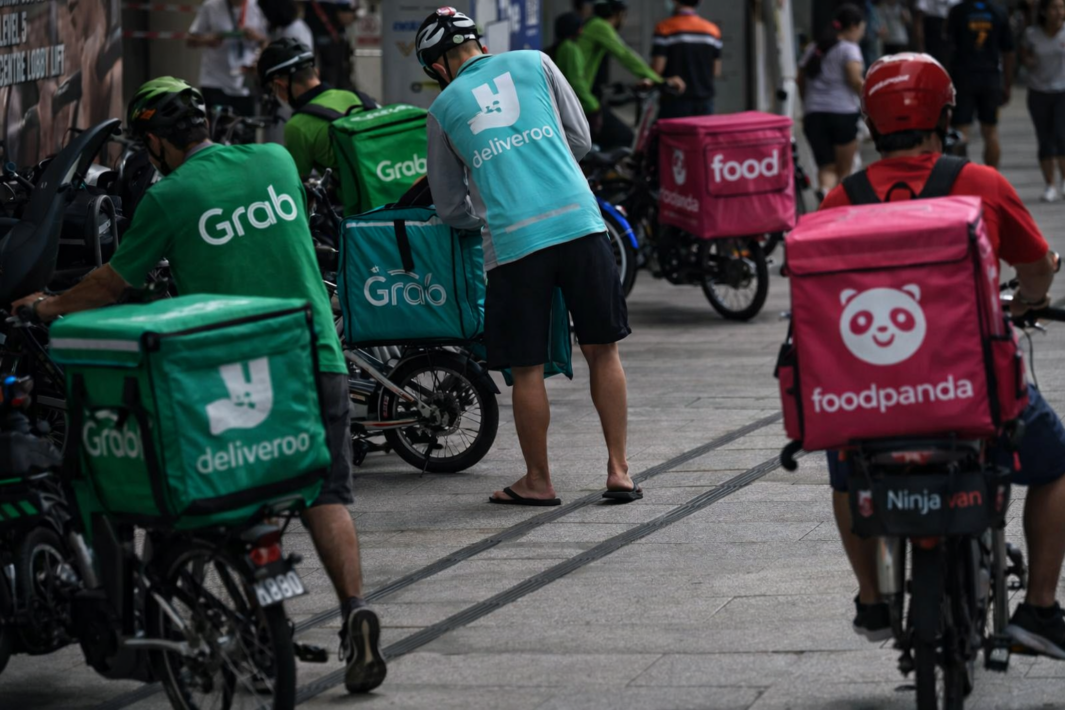

Deliveroo’s decision to shut its Singapore operations has prompted predictable concerns: riders worry about income, consumers wonder if prices will tick upwards, and competition advocates worry about market concentration.
But this is not simply a story about one platform leaving. It is a signal that Singapore’s convenience economy is repricing labour, risk and scale, and that adjustment was always coming.
For nearly a decade, food delivery was remarkably cheap. Promotions were relentless. Delivery fees were often lower than the true cost of last-mile logistics. Subscription passes promised unlimited convenience at negligible marginal cost. And for a while there was an impression that technology had permanently reduced the cost of service labour.
But it did not.
Changing economics
The low prices were sustained by two forces: venture capital willing to subsidise growth and a labour market where platform work absorbed risk that traditional employment would not. As those conditions shifted, so did the economics.
Start with market structure. Singapore’s food delivery industry has grown since the advent of food delivery apps in Singapore in 2012, but it has also consolidated. Market research firm Momentum Works estimates the market expanded by around 13 per cent in 2025 to nearly US$3 billion (S$3.8 billion).
Yet the more telling figure is concentration: While there were five players in 2018 – Grab, Uber Eats, Deliveroo, foodpanda and Honestbee – there are just three today. Grab’s market share today too has risen to roughly 69 per cent, while the second-largest player foodpanda’s stood at about 24 per cent. That leaves a narrow space for smaller players.
In platform markets, scale enables operational efficiencies. A large order base combined with a deep rider pool allows platforms to “batch” or “stack” orders – meaning a rider picks up and delivers multiple orders along the same route. This reduces idle time, improves earnings per hour and lowers the average cost per delivery.
Batching privileges large platforms because it depends on order density. A smaller player with thinner order flow cannot reliably stack deliveries without causing delays. That means lower rider productivity, higher per-order costs and weaker margins. In such a setting, a smaller platform must either subsidise heavily to compete or exit.
This pattern is not unique to Singapore. In the United States, after years of intense competition, the market has effectively consolidated around two dominant players – DoorDash and Uber Eats – with others holding marginal shares. Many cities globally exhibit a similar structure: two or three major platforms achieve sufficient density; the rest struggle to scale sustainably. The natural market structure for food delivery appears to tend towards oligopoly, not fragmentation.
A competitive labour market
But the market structure of the food industry alone does not explain the timing. Labour market dynamics provide another piece of the puzzle.
Singapore has not been a slack economy. Ministry of Manpower (MOM) data shows resident unemployment remaining low by historical standards, with labour underutilisation easing and resident employment strengthening in sectors such as financial services and healthcare. Nominal median wages have risen by roughly 5 per cent annually over the past three years.
Cheap delivery is easiest to sustain when labour has few alternatives. Singapore in 2026, after a strong post-pandemic recovery, is not that environment. A tight labour market raises reservation wages. Platforms must compete not only against one another but also against the broader economy.
Layer onto this the Platform Workers Act, which took effect on Jan 1, 2025. The Act strengthened protections in three significant ways: enhanced workplace injury compensation, formal representation mechanisms, and the phased introduction of mandatory CPF contributions for eligible platform workers.
CPF alignment is particularly significant. For years, riders bore retirement risk individually. Immediate take-home pay appeared attractive because CPF contributions were not required at employee-equivalent levels. But that came at the cost of long-term retirement adequacy.
The new framework internalises some of these costs. Government transition support cushions take-home pay as contributions rise, but structurally, platform work is being brought closer to after-CPF norms in traditional employment.
Critics argue that such moves make platform work less lucrative and platforms less competitive. It is more accurate to say these raise baseline labour costs to reflect protections that most workers in Singapore already expect. Those costs always existed; they were simply not transparent in delivery fees. If a business model becomes fragile once retirement savings and injury protection are factored in, the problem is not regulation. The problem is that labour was underpriced.
Will fees rise and will bargaining power fall?
Does this mean food delivery fees must rise? Any increase may not necessarily be steep, when batching and scale efficiencies can offset part of the higher labour cost. But the era of perpetual subsidy and ultra-low promotional pricing is unlikely to return. Prices will increasingly reflect real wage levels in a high-income economy.
More importantly, having only two dominant players left may potentially reduce bargaining power for riders and food and beverage (F&B) businesses. That is a legitimate concern which competition regulators must monitor.
However, excessive fragmentation is not automatically a pro-worker situation either. Too many platforms chasing share can lead to volatile incentives and unstable earnings. A concentrated but disciplined market may produce steadier demand and more predictable income streams – though it does shift bargaining dynamics.
The deeper issue is this: Singapore does not wish to be a low-wage economy. Our median wages and social expectations reflect that. It is economically inconsistent to demand strong labour protections while insisting that personal convenience services remain permanently cheap.
Deliveroo’s exit is not the end of food delivery in Singapore. It is a reminder that even in the digital economy, fundamentals endure: labour has an opportunity cost. Risk has a price. And scale determines survival. And the natural state of this market may well be one with fewer players – operating not on subsidy, but on sustainable economics. That’s not a bad thing for consumers, platform workers and F&B businesses.
The commentary was first published in The Straits Times.