


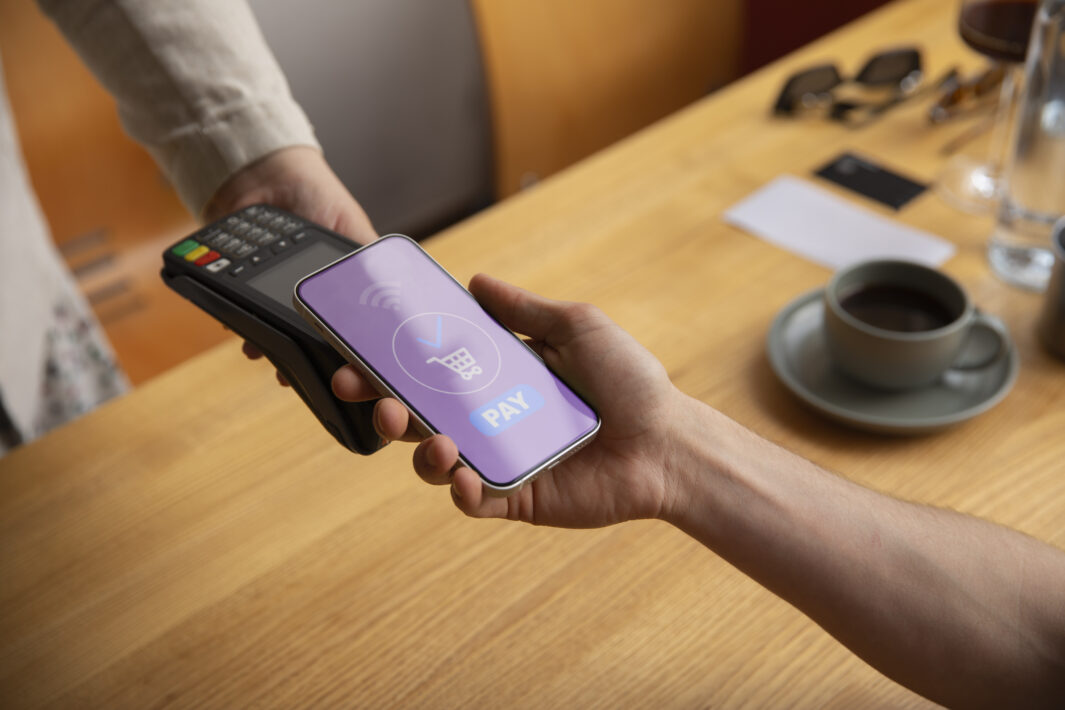

Visit a hawker centre, and you see stalls with many different QR codes displayed. It’s a boon for someone who’s not carrying cash – but the questions arise: Which code to scan? And which payment app to use?
Scan a Nets QR code with your Google Pay app – and it won’t work. Try a SGQR (Singapore Quick Response) code, and you’ll be asked which wallet to pay from. In practice, most people open their bank or wallet app first, log in, choose an account, then scan – oddly cumbersome in one of the world’s most digital economies.
Add to that the offerings of private players – GrabPay, PayNow-linked wallets, ShopBack, Apple Pay, Samsung Pay – plus buy-now-pay-later schemes, and it is clear the average Singaporean consumer faces multiple payment choices, but not always true convenience.
Cashless payments in Singapore are plentiful, but sometimes painfully confusing. How did we end up in this situation?
Is Nets holding us back?
Nets, launched in 1985, pioneered cashless payments with its debit network and later stored-value cards and QR codes. PayNow followed in 2017, enabling instant transfers between banks via mobile numbers or NRICs.
Around the same time, fintech wallets such as GrabPay, Singtel Dash, Apple Pay and Google Pay arrived – each with its own app and QR system. Together, these innovations pushed Singapore ahead of most economies in adopting digital payments, turning even small transactions at hawker centres and neighbourhood shops into quick, cashless experiences.
Yet as the ecosystem expanded, it also became fragmented: too many layers, too little consistency.
As technology advanced, Nets’ older infrastructure began to show its limits. Its QR operates mostly in a closed network, with different technical standards and settlement processes from newer systems like PayNow or major wallet providers.
That’s why a Nets QR may not work with other apps even within Singapore – the systems simply don’t “speak the same language”.
Nets endures not just because it works, but also through familiarity. Its wide merchant network and predictable fees make it practical for hawkers and small retailers, while its straightforward card and QR payments are accessible for seniors, the disabled and those uncomfortable with complex apps.
Nets’ leadership has recently said they are modernising – expanding QR acceptance, adding contactless features and pursuing cross-border compatibility. These are important steps.
But will continuing to patch older systems keep Singapore from building something truly unified and future-ready?
The lesson from China
China offers an instructive contrast. WeChat Pay and Alipay process billions of transactions daily, being all-in-one platforms where users can shop, transfer money, pay bills, book transport and access government or healthcare services.
Over time, these apps have become intertwined with people’s everyday identities – much as Nets in Singapore became part of daily life, but on a far larger digital and informational scale.
Most Chinese consumers rely on WeChat Pay or Alipay for nearly every transaction, from street food to rent. It’s fast, frictionless and widely praised as the gold standard of cashless convenience.
Their dominance, however, comes with drawbacks. When China’s central bank launched the digital yuan – a state-issued digital version of the renminbi – it struggled to gain traction. The idea was to modernise money and regain some control from private platforms by offering an official, government-backed alternative.
Yet adoption has been slow, not because of weak technology, but because consumers and merchants are comfortable with the existing super-apps.
Once everyone is locked into one network, even a better alternative finds it hard to compete.
The lesson for Singapore? We shouldn’t copy China’s model wholesale – where two dominant players control almost all payments – but we should also avoid becoming so fragmented we can’t move forward.
A better option is an approach combining the convenience of China’s model with the openness and competition Singapore is known for.
Are digital tokens the future?
This brings us to the future: stablecoins and central bank digital currencies (CBDCs). A stablecoin is a private digital token pegged one-to-one to the local dollar. A CBDC is issued by the Monetary Authority of Singapore (MAS) itself – essentially a digital version of cash backed by the state.
Both are digital tokens – secure, coded representations of value. To ordinary users, paying with them would look no different from using PayNow or a banking app; the real innovation lies behind the scenes. Money would move directly and instantly between digital wallets, with no middlemen required.
Imagine an elderly man buying nasi lemak. His grandson sets up a digital-dollar wallet on his phone – as simple as PayNow. He scans a QR code, and the hawker receives the payment instantly.
Now picture a Singapore importer paying a Malaysian supplier. Today, that means bank transfers and waiting days. With digital currencies, a programmed payment could release funds the moment shipping records confirm delivery, converting automatically to digital ringgit.
Both could transform how payments for goods and services are made.
Crucially, a digital Singapore dollar could be the common foundation our current patchwork lacks. In simple terms, instead of many separate “payment pipes” – one for each system – there would be one common pipe carrying digital Singapore dollars.
Every wallet or card would connect to the same pipe, so whether you’re using your DBS app, Grab wallet, or Apple Pay, all move the same digital dollars on the same network.
For consumers, it would feel seamless: scan any QR code and it just works, no matter which app you use.
Singapore could embrace digital dollar
Singapore could be the ideal test bed for this.
The MAS has already shown leadership through initiatives like Project Guardian, which explores tokenised assets and decentralised finance with global banks. DBS has issued tokenised bonds, and pilots of a digital Singapore dollar for cross-border transfers demonstrate the practical value of programmable money.
Last year, finance transaction company Swift, UBS Asset Management, and blockchain network connector Chainlink, under MAS’ supervision, successfully demonstrated how digital assets stay compatible with traditional systems by settling tokenised assets in a country’s legal tender currency.
Add to this Singapore’s compact scale, digitally literate population and trusted regulator. Unlike larger economies weighed down by entrenched players, Singapore can move quickly and set the standard for how a trusted retail stablecoin or CBDC could work in practice.
Still, many Singaporeans will ask: Why change what works? And cash will always matter – red packets at Chinese New Year, tips at hawker centres, the reassurance of physical notes.
Then there’s the fear of anything labelled “crypto”. Clarity is vital: a digital Singapore dollar would not be speculative. It would be fully backed by the Government, as stable as cash in the bank. The interface could remain familiar – a card tap, a simple QR scan.
Seniors wouldn’t need to navigate new jargon. The system would evolve quietly beneath the surface.
Some may wonder: Can’t we simply keep this familiar hotch-potch for everyday use, and use the new digital systems only for fintechs and global payments? In theory, yes – but that would mean maintaining two parallel systems, one modern and one outdated. Over time, that gap would widen, creating inefficiencies.
A unified digital dollar framework ensures that the same infrastructure powering cross-border finance also benefits everyday life at home, from hawker stalls to international trade.
What streamlining could look like
Other regional economies are also experimenting. In fact, there is a new high of 49 CBDC pilot projects around the world, and three countries have fully launched a digital currency.
Hong Kong has piloted cross-border CBDC use with China, and Japan has tested a digital yen for wholesale settlements. While important, these initiatives are narrow in scope. Few combine Singapore’s regulatory vision, fintech vibrancy and institutional trust.
Singapore does not need another QR variant or incremental fix. The new Singapore Payments Network (SPaN), which now oversees systems like FAST, PayNow, and SGQR, is a good governance step – but it mainly coordinates existing payment options. It’s like smoothing out multiple train schedules rather than building a new express line.
Instead, it should aim for a unified digital payment layer. This could begin with a regulated Singapore dollar stablecoin or pilot retail CBDC – issued either by MAS or licensed private players under MAS oversight. Integration with PayNow and SPaN would make access universal, while an open system for both banks and fintechs would encourage innovation at the edges with trust at the core.
From the outset, it should also be cross-border-ready, with Singapore’s digital dollar converting automatically with digital currencies in Malaysia, Hong Kong, or Japan.
This would position Singapore as a regional hub – streamlining payments within the nation and across borders, while globally helping shape the “financial architecture” of the digital era: the shared rules, standards and digital plumbing that determine how money moves safely and efficiently.
The article was first published in The Straits Times.